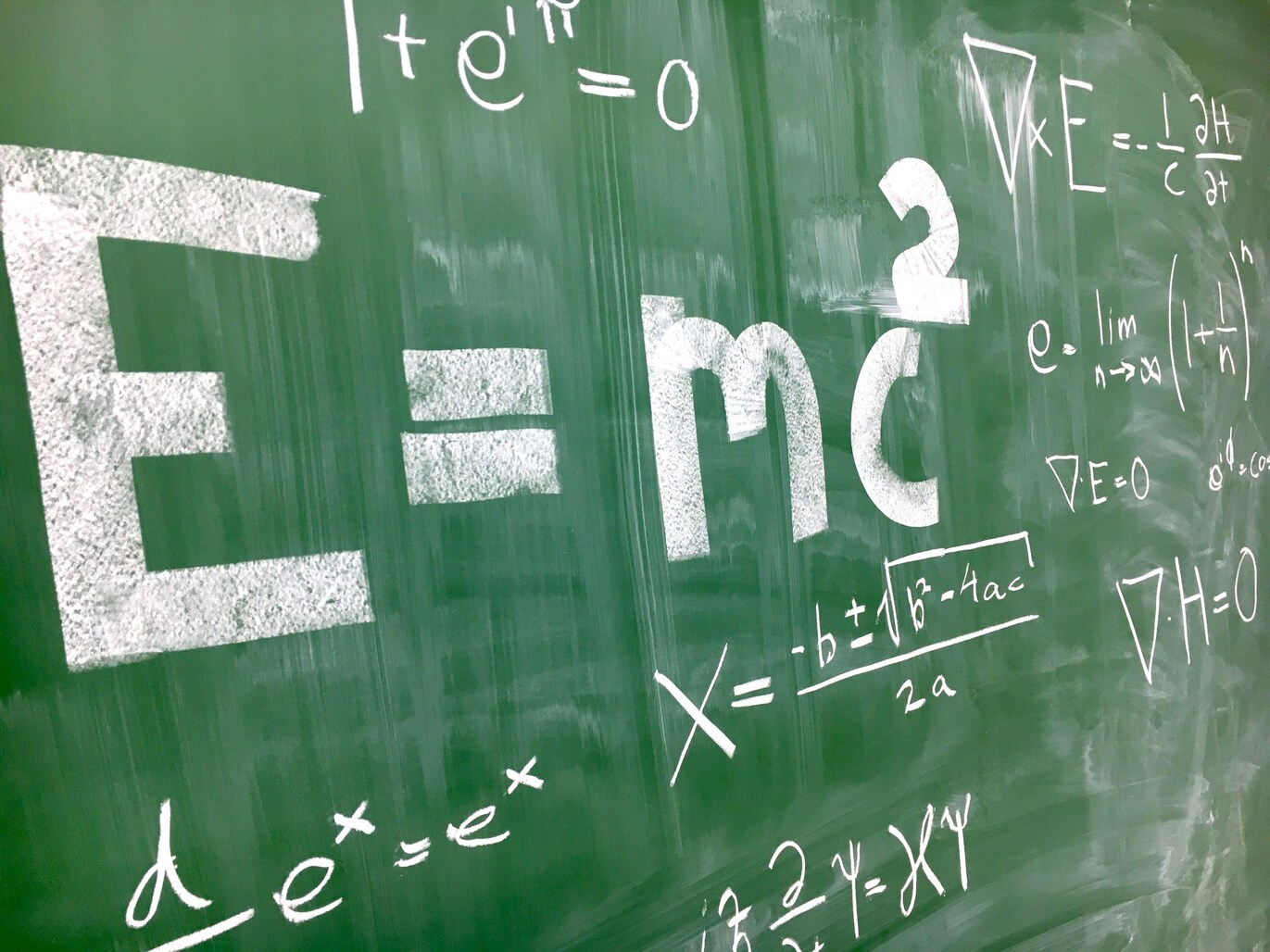
When I decided to pursue chemistry in my undergraduate studies, a lot of my relatives were critical of my decision. Where I come from, people consider physics, chemistry, mathematics, biology, etc. as general subjects.
Most people who were not in favor of my decision were like, ‘Why general subjects? They have fewer job opportunities and longer courses.’
They were perhaps correct from their point of view. After all, their comments were just a reflection of society’s popular beliefs.
And how does society develop such beliefs?
Probably by looking at the trend governments and corporations follow across the world. The notion of general subjects or, more accurately, basic science offering fewer job opportunities has become strong because governments do not prioritise fundamental science.
Why aren’t governments prioritizing fundamental science?
I guess because they can’t see an immediate benefit or profit by prioritising basic science. Most governments around the world are shortsighted because they know they will not stay for long and new governments will form. Hence, only a handful of governments have a 30-year or 50-year or even 100-year plans. Most governments want to see a benefit within the 5-10 or 15 years time span (as they stay in government approx that long).
For corporations, the equation is even simpler. They think that because companies depend on profit to survive, focusing on quick gains is more logical than investing in basic science for over 30 years (although the latter can make them more profitable in the long term). In fact, only larger corporations feel some obligation to invest in fundamental science; small ones hardly think about it.
Thus, you must have observed an upsurge of engineering courses in the last 30-40 years (which has slowed down now). Information technology has skyrocketed the demand for software engineers. Of all professions in science, software engineers perhaps earned the most adulation (and money) in a society in the last 30 years.
Mind you, I mentioned only software engineers, not civil, mechanical, or electrical engineers. From where I did my PhD (IIT Bombay), almost every undergraduate student wants to take computer engineering as their major. Such is the craze. I am sure similar situations arise in many parts of the world.
The craze is only in software engineering, not hardware engineering or electrical engineering (which are related). In fact, some people I knew just a few years back were sure that coding is going to be the new alphabet that every child (and adult) must learn from childhood.
I think coding is great, but making it a compulsion for a child or adult is just hype. Today, all of us are witnessing the truth. An artificially intelligent application can code faster and better than most software engineers. And AI is going to get better and better at coding from here (among other things).
So, this is a great time once again to realize the significance of fundamental science in taking human civilization to the next level. Artificial intelligence (AI) has made the distinction between applied vs basic science clearer.
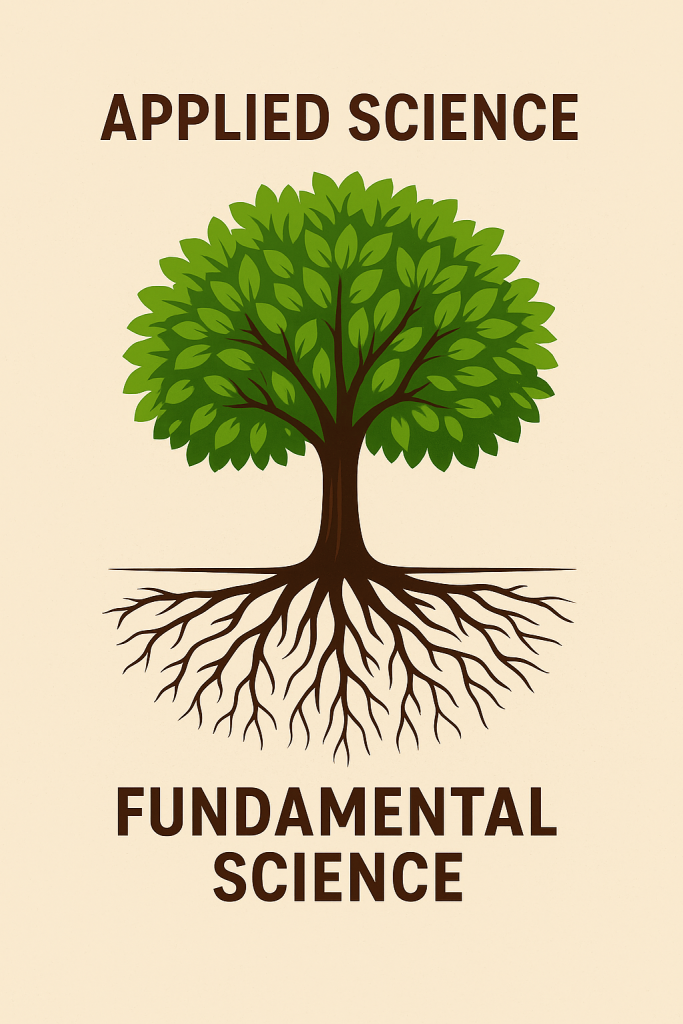
I will present my viewpoint on why the current time (and the future) is one of the best and crucial times to study fundamental science.
The Zero to One Principle
Peter Theil in his book Zero to One presented this idea of going from 0 to 1, which basically signifies creating something entirely new and revolutionary, whereas 1 to n (any number) means copying or expanding to existing products.
The point is that zero holds an extremely significant value in mathematics (thanks to Aryabhatta). Zero before a number does not make any difference (001), but zero after a number makes a huge difference (100). Hence, going from zero to one means doing something uniquely original.
In scientific terms, we refer to a groundbreaking discovery as paradigm-shifting science, similar to 0 to 1. Eminent scientists look for those hunches to discover something truly original, something that changes or reinforces our way of thinking.
Of course, such endeavours are never easy and time-consuming. Discovering a paradigm-shifting scientific observation cannot have a deadline, unlike building a bridge, software, or car. It could take 2 years, 5 years, 20 years, or even more. Fundamental science is most often curiosity-driven and hardly profit-driven.
Today, we stand on the cusp of rapid advancements in artificial intelligence, already witnessing the transformative applications it brings to various industries.
AI is a great pattern recognizing machine. It is great when it comes to mixing and matching different ideas and coming up with solutions. In other words, it is good in going from 1 to n (application). But where it lacks is coming up with completely new ideas. Ideas that can provide fresh and creative solutions. It can not go from 0 to 1 (fundamental science).
As we venture further into the future, AI will be even better at creating software applications, providing faster mathematical calculations, and making existing products better. But perhaps it cannot invent a new language or principle to make software applications better, create new mathematical equations, or make original products.
The leap from improving a system to inventing an original system is where fundamental science shines (given time and investment). So, how useful AI will become ultimately depends on the advancement of fundamental science in the future.
Curiosity and Longer Attention Spans
We are living in the most distracted time in history, and it will continue to get worse. The attention span of people is at the lowest because of excessive short-form internet content. Technology, which is supposed to be a boon to humankind, is becoming a curse for most people, and I have written extensively on this.
All the distractions today also prevent people from pursuing their curiosities. The truth is, a lot of people barely have enough time to really think about what they are passionate about.
This inherently implies that we have very few people left today who are truly curious and have long attention spans; both these qualities are crucial in making a scientist eminent (among others).
Fundamental science thrives on curiosity and patience to pursue that curiosity (long attention span). As we will have more and more screens and short-form entertainment in the future, there will be a scarcity of people with qualities that could make advancement in fundamental science.
The quest of pursuing basic science and trying to make a paradigm shift will demand your extreme attention and curiosity by default.
In an era where AI excels in pattern recognition and coming up with answers in seconds, the patient, curiosity-driven labor of fundamental science is the only reliable source of zero-to-one breakthroughs.
The modern tech world’s industrial pace emphasizes fast metrics, viral growth, and quarterly goals. This tempo is excellent for scaling existing solutions, but not good for discovering new scientific paradigms.
Only genuine curiosity lets you ask questions like ‘What happens if……?’, ‘Why does this behave that way?’,’Is there a hidden symmetry here?‘, etc.
It requires long attention spans in the form of sustained time for reading, experimenting, failing, and refining. Read about any scientific breakthrough and you will find it took years of patient work for its development.
I have no doubt in my mind that as digital distractions multiply, only a small minority will manage to protect genuine curiosity and longer attention spans. Those people in the minority will become unusually valuable. They are the ones who can ask the odd, stubborn questions, run patient experiments, and do the slow thinking that turns curiosity into fundamental discoveries, which could ultimately expand the capabilities of AI.
Nurturing Fundamental Science
When humans discover something novel and unique about nature, it does not happen because someone has more access to information, but through subconscious processing of required information, where intuition sparks a hunch, leading us toward a new discovery.
AI can speed up the access to rich information, but it cannot automate human intuition. As the great Albert Einstein once said-
“The intuitive mind is a sacred gift and the rational mind is a faithful servant. We have created a society that honors the servant and has forgotten the gift.”
Nurturing basic science should be of utmost significance if we wish to create a brighter and better future. While government and corporations can do their part by backing long term curiosity driven research and not just immediate profit-driven ones, each of us can contribute to this purpose.
Read about fundamental science and how it is the foundation for every product we are using today. Basic research on transistors makes every digital device we use today possible; the GPS system we rely on works because of Einstein’s relativity theory; all the antibiotics and modern vaccines result from basic research on microbes and immunology. The list is quite extensive.
Only with increased awareness you can advocate for further long-term research in your surroundings.
Also, if you’re a teen or a parent, protect qualities such as curiosity, a good attention span, and patience in yourself and your child. These are the traits that will ignite a child’s passion for basic science and potentially alter the course of humanity for the better in the future.
Undoubtedly, AI will increasingly get better by building on existing knowledge. But we need to create new fundamental knowledge to take the next leap of scientific advancement. Investing in slow, curiosity driven work through funding, education, corporate contribution is the way to secure the advancement in fundamental science.
People like Jensen Huang and Elon Musk, who are working at the forefront of AI, advising the same to younger students.
That choice is ours, whether we will prioritize convenience by focusing only on short-term gains or cultivate the conditions for genuine discovery.
Do not force your children to learn just coding, but let them take an interest in fundamental sciences like physics, chemistry, mathematics, biology. That’s how they can create a better future.
If you liked this viewpoint, subscribe to this blog to get all the updates about future essays
Liked this essay? Subscribe to get my new essays directly in your inbox.